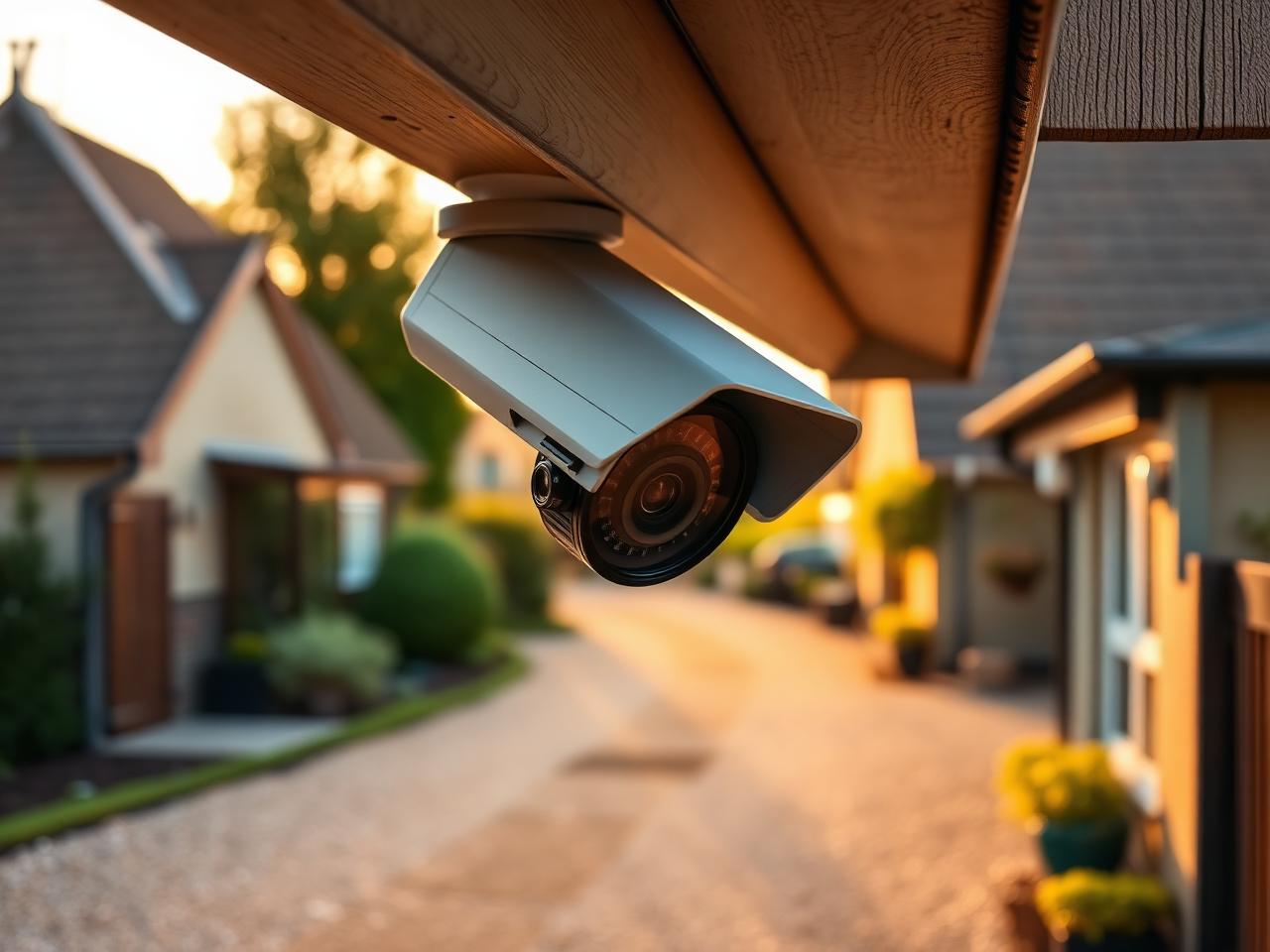
There's a particular sinking feeling that comes with opening the CCTV app after something has happened — a gate left open, a vehicle in the yard at night, machinery moved — and finding a grey rectangle where the footage should be. The camera had been offline for nine days. Nobody knew.
We see this constantly on rural properties around Northamptonshire, and here's the uncomfortable truth: it's almost never the camera. The camera is usually fine. What failed is the network behind it — and it failed silently.
The usual suspects
Power that blinks. Rural electricity supplies flicker more than town ones — storms, agricultural machinery, overloaded circuits in old outbuildings. A camera powered by a cheap plug-top adapter in a barn will reboot with every blink, and sometimes it doesn't come back cleanly. Cameras fed by proper PoE (power over the network cable) from a decent switch survive this far better — and when the switch itself is on a small UPS, a two-second blink never reaches the camera at all.
The WiFi camera on the edge of coverage. A camera that connects over WiFi from the far corner of the yard is living on borrowed time. It worked in summer when it was installed; then the leaves came, or the hay stack moved, or the signal was always marginal and nobody measured it. WiFi cameras drop, reconnect, drop again — and each drop is a gap in your recording. Our position after hundreds of rural jobs: cameras deserve cables, and where a cable truly can't go, a proper point-to-point bridge — not domestic WiFi.
The forgotten switch in the barn. Somewhere between your cameras and your recorder there's usually a small network switch in a dusty corner. If it's an unmanaged £15 unit from an online marketplace, it can lock up, drop ports or die of heat in July — and nothing tells you. Every camera behind it goes dark at once. (If all your cameras drop together, the switch or the link to that building is almost always the culprit.)
The recorder quietly full or confused. NVRs fail in undramatic ways: a hard drive at the end of its life, a firmware update that changed a setting, a clock that drifted so far the footage timestamps are useless. The cameras look "up" — but nothing useful is being recorded.
The internet link, not the cameras. Sometimes every camera is recording perfectly and only the remote viewing is broken — the broadband or Starlink connection dropped, or a router update broke the path the app uses. You find out at the worst moment: away from home, trying to check the yard.
Why you never find out in time
All of these failures share one property: they're silent. A camera doesn't ring you when it goes offline. The app just shows stale footage or a spinner, and unless you religiously open it every day, the gap grows. The average rural CCTV fault we're called to has existed for over a week before anyone noticed.
For a security system, that's the whole game lost. Footage you don't have is the only footage you ever really needed.
What monitoring actually does
This is the problem remote monitoring exists to solve. On the networks we build, the key equipment — switches, access points, bridges, the recorder's network connection — reports its status continuously. When a camera or the switch feeding it drops, we can see it in minutes, not weeks:
- You get told. A real notification that something is down, while there's still time to care.
- We often fix it remotely. A locked-up device can frequently be power-cycled or reconfigured without a site visit.
- Patterns get caught early. A camera that reconnects every night at 6pm is telling you something (a timer, a heater, a marginal link) — monitoring sees the pattern before it becomes a failure.
- The boring maintenance happens. Firmware and settings stay current, so the system doesn't rot.
That's what our Monitoring & Care Plans are for — ongoing remote monitoring and priority support on the network behind your cameras, from a local team who installed it and know the property. See the tiers on our services page.
Start with the truth about your system
If your cameras drop offline and nobody can tell you why, the answer is measurable. Our £99 Network Health Check tests the whole chain — power, cabling, switches, wireless links, recorder and remote access — and gives you a written report of what's actually wrong and what it costs to fix. The £99 is credited if you go ahead with the work.
Cameras are only as reliable as the network under them. Fix the network, watch the dropouts stop — and let monitoring make sure they never come back quietly.
Need help designing your network?
Honest advice, no hard sell.
Book a Consultation